

Theatre Standards PK through Grade Twelve
California Arts Standards for Theatre Grade TK-Twelve
The CAS for Theatre, adopted in 2019, provides a blueprint for students to achieve theatre literacy. The performance standards are written to address both traditional conventions and drama processes, and in the early grades acknowledge the role of dramatic play and guided drama experiences. Access the full standards document here. The theatre standards are on pages 171- 198.
California Preschool/Transitional Kindergarten Learning Foundations
While the California Arts Education Framework provides guidance for teaching theatre in pre kindergarten, California PK/TK Learning Foundations (CA PTKLF) for Visual and Performing Arts provides guidance for teaching theatre to three-to-five-and-a-half-year-old children. See the California Arts Education Framework (page xi) for guidance about when to use the CAS and when to use the CA PTKLF.
Spotlight on Theatre Education
- Artscapes–El Dorado County is a short video that features El Dorado Union High School District in Placerville where a broad school-based theatre program is embedded in the culture of the community.
-
Musical Show Production and Advanced Musical Theater is a story about Moorpark High School in Ventura County where a musical theatre program allows students to participate in all elements of theatre production while taking on leadership roles. Through this students experience creative control and a sense of ownership of a production that they write, produce, advertise, choreograph, direct, and perform.
Professional Learning
Professional Organizations
The California Educational Theatre Association and the Educational Theatre Association offer a “professional home” for existing and aspiring theatre educators. A variety of resources are available to both members and non-members of these organizations.
Creativity at the Core Professional Learning Modules
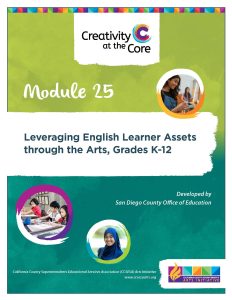
- Leveraging English Learner Assets through the Arts, Grades K-12 uses the Arts as a lens to make cultural and linguistic connections for English Learners. The focus is on leveraging student assets to build content, access 21st century skills,and attain high levels of language proficiency and mastery of standards.